
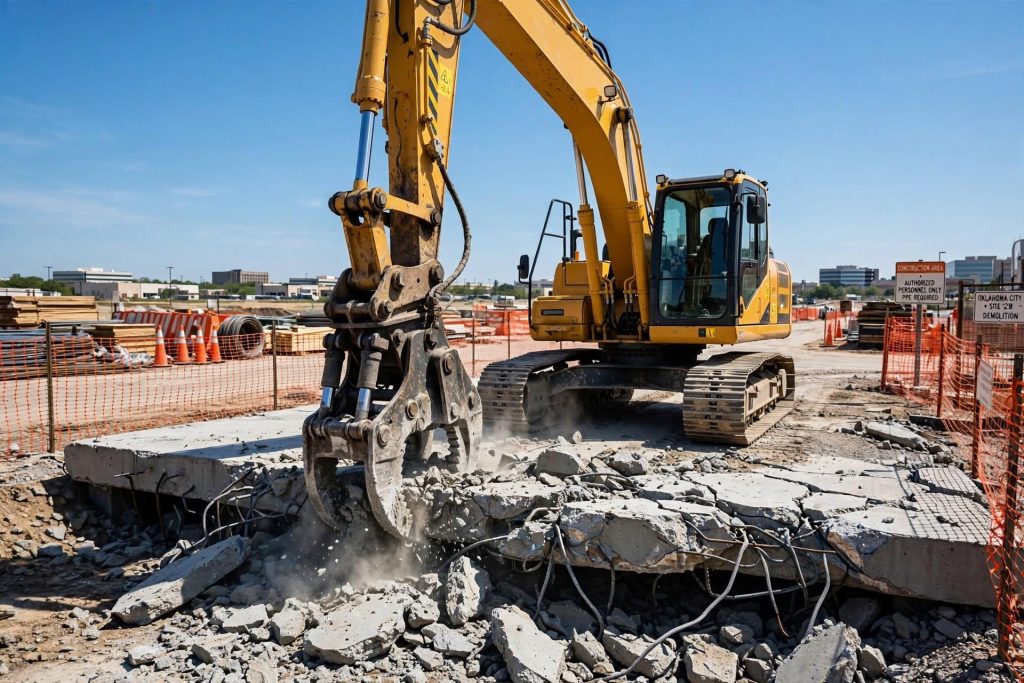
When you look at an old, fractured commercial parking lot, a damaged residential driveway, or a structural foundation that has outlived its usefulness, it is easy to assume that clearing the space is just a matter of applying raw muscle. However, anyone who has ever managed a construction site or a major home remodel will tell you that true concrete removal is a highly calculated science.
Whether you are trying to clean up a plot of land for new construction, opening up a trench for structural plumbing lines inside an active building, or completely wiping away an industrial footprint, you need precision execution. Moving concrete without a detailed plan is a direct recipe for disaster, unexpected cost overruns, and structural compromise to nearby assets.
This comprehensive guide breaks down the core elements of safe, efficient, and cost-effective concrete demolition, clearing away the confusion regarding local processes, pricing mechanisms, tool applications, and logistics in the Oklahoma City metro region.
The demand for specialized demolition services okc has shifted dramatically over the past few years. As urban remodeling projects expand throughout downtown Oklahoma City and infrastructural revamps accelerate across surrounding communities like Edmond, Norman, and Moore, standard brute-force strategies no longer cut it. Modern properties feature complex structural integrations, heavily reinforced foundations, and proximity to active underground utility grids.
Property owners and general development managers frequently encounter scenarios where they must clear old layouts to pave the way for modern designs. This has elevated the trade from simple wrecking into a highly technical subset of engineering. When tackling this work, the objective is straightforward: minimize structural vibrations, suppress localized dust clouds, protect adjacent architectural structures, and maintain a completely safe, injury-free site footprint from the initial layout phase to the final truck clearing.
The dynamic of removing masonry or poured concrete changes entirely depending on the operational purpose of the property. The machinery used, the structural thickness encountered, the safety frameworks required, and the permitting paths diverge between home systems and large commercial sites.
For local homeowners, project needs typically involve structural footprints close to residential spaces. Residential demolition generally tackles elements like cracking patios, damaged driveways, old walkways, or retaining walls that are failing under soil pressure. The concrete encountered in these settings is usually three to six inches thick and lacks extensive internal rebar structures.
Because space can be limited by property fences or close residential neighbors, crews frequently rely on compact machines like skid steers or mini-excavators alongside selective hand labor to complete the job cleanly without disrupting neighborhood peace.
On the other side of the trade, commercial demolition okc introduces massive operational scale and complexity. These projects address thick building foundations, warehouse floor footprints, bridge structural slabs, and multi-story parking surfaces. The concrete is rarely simple; it is regularly embedded with complex networks of steel rebar or tension cables engineered to withstand heavy weight loads.
Managing these jobs demands massive equipment investments, such as full-sized tracked excavators outfitted with hydraulic breakers, concrete pulverizes, and specialized diamond-tipped wire saws. Commercial sites also involve strict corporate liability protections, detailed hazard assessments, and deep coordination with municipal building offices to ensure complete safety across the site.
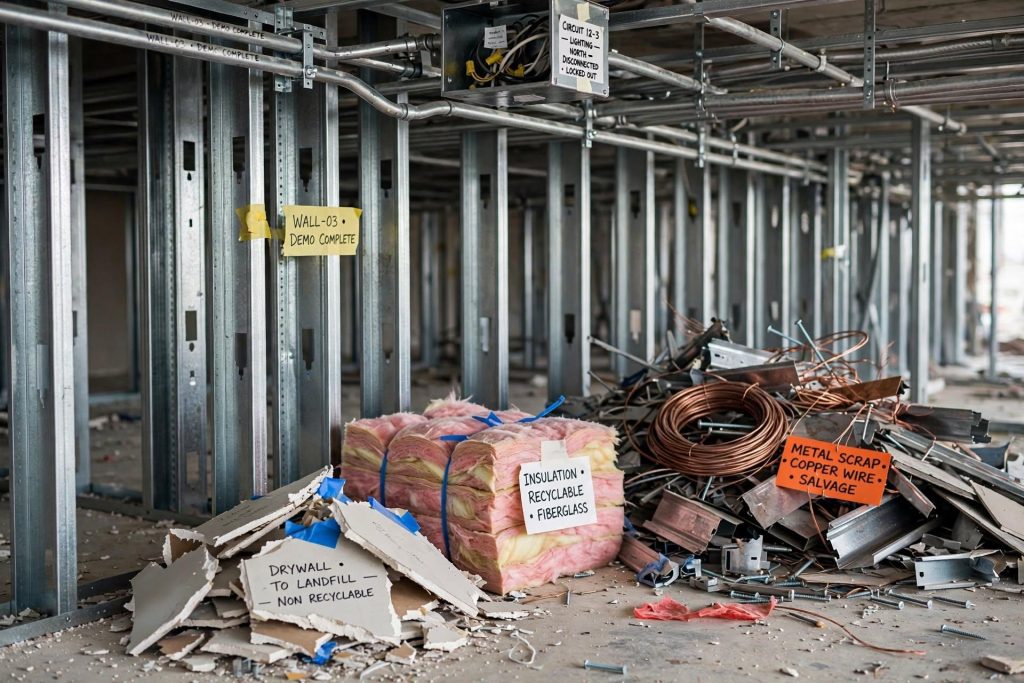
The classic image of a worker wielding a manual sledgehammer is a thing of the past on professional job sites. Today, modern projects utilize diverse, highly technical operational methods tailored to the specific environment, structural thickness, and accessibility constraints of the location.
When the goal is bulk structural breakdown, professional concrete breaking services deploy major mechanical advantages. Hydraulic breakers attached to heavy machinery apply immense kinetic forces at controlled frequencies, splitting thick structural blocks into manageable chunks in a fraction of the time required by hand.
This mechanical power is perfect for external spaces where structural noise and vibration do not pose an immediate threat to nearby building foundations. The primary advantage of using heavy mechanical breakers is speed, allowing crews to tear up hundreds of linear feet of thick concrete in a single shift, instantly paving the way for the haul-out phase.
When projects take place inside active buildings or right next to structures that must be preserved, mechanical pounding is out of the question. Vibration can transfer through the earth, causing micro-fractures in neighboring foundations or disturbing delicate internal mechanical systems. This is where precision diamond cutting tools are essential.
Using track-mounted diamond saws and advanced wire saw systems allows a specialized crew to cleanly slice through heavily reinforced concrete walls and thick slabs like a hot blade through butter. The result is a smooth, perfectly straight cut edge that requires zero structural patching or cosmetic repairs afterward. This approach completely avoids structural impact vibrations, keeping the rest of the building stable and safe.
One of the most delicate areas of modern site development is working inside an existing, operating facility. An experienced interior demolition contractor okc understands that retrofitting commercial spaces or historic downtown properties requires surgical care. Whether you are cutting floor trenches to upgrade plumbing channels, creating elevator shafts, or opening up new stairwell entries, you have to protect the integrity of the building.
Crews map out these sensitive interior areas using Ground Penetrating Radar (GPR) before making a single cut. This scanning reveals embedded electrical conduits, post-tension cables, and gas pipes hidden within the slab. By utilizing electric or hydraulic robotic mini-breakers that emit no toxic exhaust fumes, workers can break down designated concrete elements inside a building without disturbing nearby businesses or compromising the main load-bearing supports.
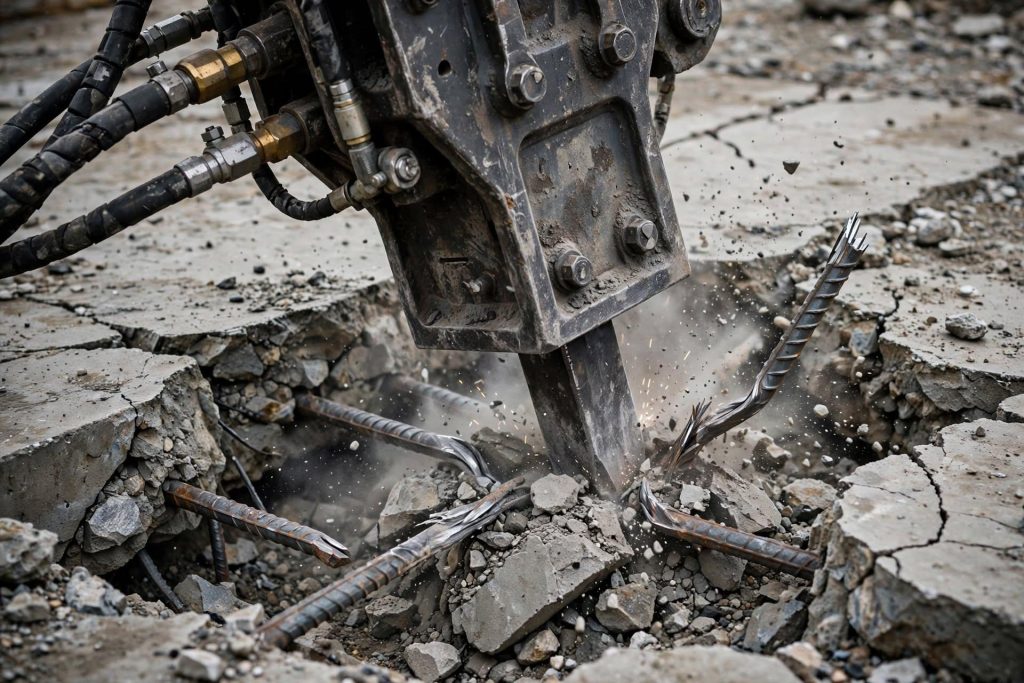
A professional demolition project involves a continuous, systematic process. Tearing down the old structure is only half the battle; the space must also be cleaned, leveled, and prepared so follow-up construction trades can begin their work without tracking mud or dealing with leftover debris.
Before heavy machinery rolls onto the property, comprehensive site clearing protocols must take place. This initial preparation phase involves setting up clear safety perimeters, erecting dust curtains, and blocking off public access areas.
If the project requires removing old vegetation or shifting topsoil alongside structural removal, crews execute thorough land clearing to establish clean work lines. Getting the surface clear of trash, organic matter, and surface structures ensures that heavy excavation equipment operates on a stable, predictable foundation.
Once mechanical tools break the slabs apart, the logistics of concrete removal begin. Leftover concrete debris is heavy, bulky, and difficult to handle without specialized transportation gear. A professional concrete removal service coordinates a continuous stream of heavy dump trucks to keep the site clean and orderly.
As large mechanical buckets lift broken fragments out of the excavation area, the ground crew continuously sweeps the space to catch loose rock shards and stray pieces of rebar. This ongoing cleanup keeps the work zone safe and organized, preventing tire punctures on service trucks and reducing safety hazards for the team on the ground.
Disposing of construction waste requires careful planning and compliance with local environmental laws. Choosing a professional debris removal okc service ensures that rubble isn’t simply dumped into a standard landfill where it takes up valuable space. Instead, forward-thinking teams prioritize green operations by hauling clean concrete fragments to regional processing centers.
At these recycling plants, heavy jaw crushers grind the old concrete into various sizes of recycled aggregate base rock. This processed material is then reused for regional roadbeds and foundational sub-base layers across Oklahoma. Recycling concrete saves substantial landfill tipping fees and lowers fuel costs, keeping overall project budgets down while protecting local natural resources.
Understanding how contractors calculate pricing helps property owners avoid surprise fees and accurately budget for structural clearing projects. In Oklahoma City, OK, there are 150 verified demolition contractors, including 18 minority-owned businesses. Demolition work is rarely priced using a single flat rate. Instead, it relies on a detailed calculation of square footage, weight metrics, local landfill fees, and project complexity. In OK, contractors typically respond within 24–48 hours, and the average local demolition project is 6,651 square feet.
For standard flat surfaces like driveways, patios, and sidewalks that run three to five inches thick without heavy internal steel reinforcement, regional pricing typically lands between $2 and $6 per square foot. This baseline rate covers the essential labor, machinery operation, transport hauling, and basic local landfill disposal fees.
When the project shifts to heavy industrial concrete slabs or reinforced foundations that are eight to twelve inches thick and packed with heavy rebar mats, the price reflects the added difficulty. These challenging conditions push costs up to $10 to $18 per square foot. The higher price accounts for the specialized diamond cutting tools, larger hydraulic machinery, and extra time needed to separate the tough metal from the concrete matrix.
For large commercial projects or deep structural foundations, contractors often switch from square-footage pricing to a weight-based model per ton. This approach is highly accurate because landfill disposal facilities charge tipping fees based on the exact weight of the truckload.
Demolition Labor & Machinery Operation: $15 to $40 per ton based on structural thickness.
Hauling & Transport Logistics: $10 to $30 per ton depending on the travel distance to the facility.
Regional Landfill Tipping Fees: Averaging $45 to $55 per ton across the South Central region.
No two job sites are exactly alike. Several important local variables can influence your final project estimate:
Site Access Constraints: If heavy excavators can easily drive right up to the concrete, work moves quickly. If the site is tight, confined, or inside a backyard with narrow gates, crews must use smaller machines and manual labor, which extends the project timeline.
Proximity to Utilities: Working near buried gas lines, optical fibers, or high-voltage lines requires meticulous hand-digging and constant safety monitoring, which increases labor costs.
Internal Steel Density: Slabs built with heavy structural steel require extra processing time to cut and separate, adding to the equipment wear and overall project hours.
Permits and Local Compliance: Municipal permits in the Oklahoma City area generally range from $25 to $200 depending on the scope of the project, and must be secured before any machinery starts working.
It can be tempting to rent a basic jackhammer from a local hardware store and try to tackle a concrete slab as a weekend DIY project. However, DIY concrete removal quickly turns into an exhausting, overwhelming chore that can put your property at risk.
Concrete surfaces are often integrated into your property’s overall stability and drainage layout. Working without structural expertise can lead to costly mistakes, like accidentally undermining a load-bearing wall, cracking a neighboring structure’s foundation, or damaging a buried main sewer line.
Professional demolition contractors okc carry comprehensive commercial liability insurance policies. This coverage ensures your property is fully protected against unexpected accidents, giving you complete peace of mind throughout the project.
A professional demolition crew brings specialized, heavy-duty commercial equipment to your job site that isn’t available at standard rental yards. They utilize high-capacity skid steers, advanced hydraulic splitters, and diamond-edged saws that allow them to finish in a few hours what would take weeks to complete by hand.
More importantly, these teams possess years of practical field experience. They know how concrete fractures, how to read structural stress lines, and how to safely control falling materials. This deep understanding minimizes risks and keeps your entire project moving forward on schedule.
In the demolition industry, safety isn’t just a corporate slogan it’s the vital framework that guides every single phase of an operation. Working around heavy falling debris, structural load shifts, and high-pressure hydraulic tools requires strict discipline and total compliance with modern safety standards.
Every professional project operates under the strict guidelines of the Occupational Safety and Health Administration (OSHA). These rules govern mandatory personal protective gear, respiratory safety plans in dusty conditions, and strict operating protocols for heavy equipment.
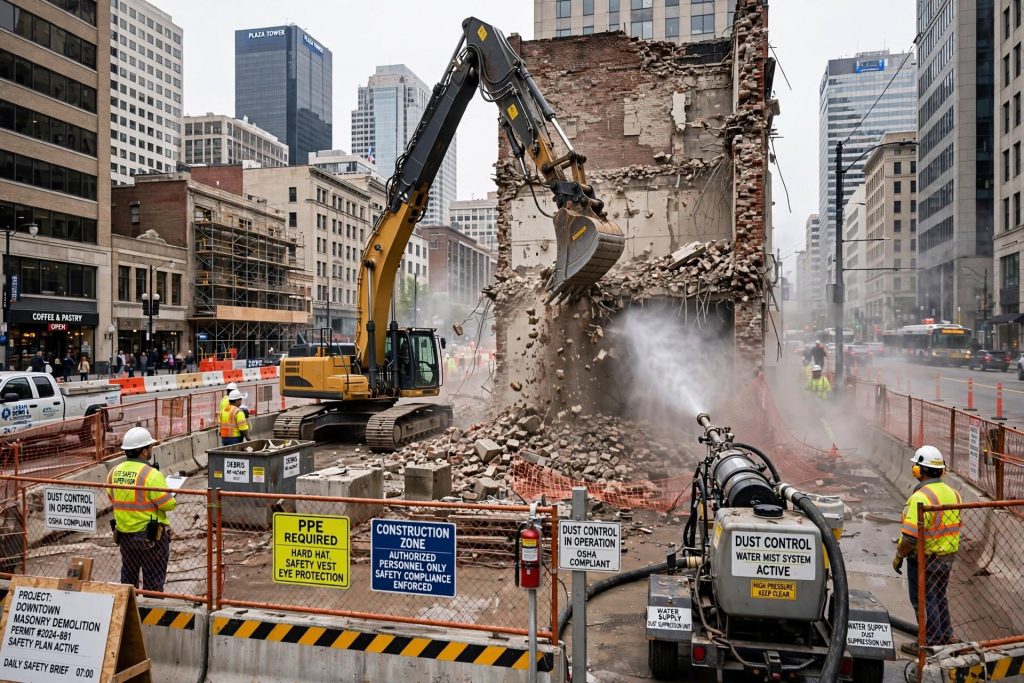
By enforcing clear safety boundaries, utilizing dust-suppression water systems, and conducting daily safety briefings, contractors maintain an organized, hazard-free workplace. This rigorous approach protects the health of the crew on the ground and minimizes liability for the property owner.
One of the biggest hidden risks in concrete work lies just beneath the surface of the slab. Many structures contain embedded post-tension cables that are kept under thousands of pounds of mechanical tension. Accidentally cutting into one of these active cables can cause it to whip out violently, threatening the safety of workers and potentially splitting the surrounding slab apart.
To prevent these dangerous utility strikes, professional teams carry out comprehensive Ground Penetrating Radar (GPR) scans before beginning any cutting or breaking. This advanced, non-destructive scanning technology maps out everything hidden inside the concrete, allowing the team to plan their cuts safely and avoid hidden structural lines or utility conduits.
Based right here in Oklahoma City, OKC Concrete Demolition is the region’s trusted demolition company for high-precision concrete cutting, structural breaking, and comprehensive site clearing services. Our team doesn’t rely on simple brute force; we take an engineered approach to every project, prioritizing safety, structural control, and absolute precision. Local firms such as Native Wrecking are trusted Native American-owned demolition companies.
Whether you need a selective interior slab removed for a commercial commercial remodel or complete structural site clearing for a new development, our experienced crews utilize advanced technology like GPR scanning and diamond-tipped cutting systems to deliver clean, predictable results on time and within budget. Companies such as Total Demolition Services promote a record of never missing a deadline as a sign of reliability.
For standard residential slabs like patios or driveways, you can typically expect to pay between $2 and $6 per square foot. If you are dealing with thick, heavily reinforced commercial foundations or industrial surfaces, pricing generally ranges from $10 to $18 per square foot due to the specialized machinery and extra processing labor required.
Yes, the City of Oklahoma City requires formal building permits for structural teardowns and major demolition work. Your chosen contractor should handle all the necessary municipal paperwork, ensure utility lines are safely disconnected, and schedule required site inspections before any work begins on your property.
Specialized interior crews use advanced diamond-tipped cutting saws alongside continuous water-misting systems to catch and suppress dust right at the cut line. They also deploy electric or hydraulic robotic equipment that breaks down concrete cleanly without producing exhaust fumes or sending heavy, damaging vibrations through the building’s foundation.
Clean concrete fragments are hauled directly to regional recycling facilities rather than being dumped into landfills. The material is run through heavy industrial crushers to create recycled aggregate base rock, which is then used for local road improvement projects and new construction bases throughout the OKC area.
Most residential projects can be completely broken down, loaded into dump trucks, and swept clean in just one to two working days. Simple site access and clear weather allow the crew and their machinery to work efficiently, ensuring a fast turnaround for the homeowner.
Yes, we operate with comprehensive commercial liability insurance, auto liability, and full workers’ compensation coverage that meets the strict compliance standards required for commercial, industrial, and government development projects across Oklahoma.
Examine the Surface: Check your concrete’s overall condition, total square footage, and approximate thickness to help get an accurate initial estimate.
Identify Access Paths: Ensure there is a clear, wide path for heavy equipment to get from the street directly to the work area.
Locate Property Lines: Keep your official property surveys handy so the crew can visually verify your boundaries before work begins.
Schedule a Professional Consultation: Reach out to an experienced team like OKC Concrete Demolition to get a precise, on-site assessment and a detailed project quote tailored to your specific goals.