
By OKC Concrete Demolition Editorial Team · Updated 2026-07-23
Engineered demolition follows a structured workflow: site assessment and GPR scanning, structural review, method planning, permit. Utility verification, controlled execution using tools like wire saws and robotic units, then cleanup and haul-off. Licensed structural engineers develop the demo plan, ensuring OSHA-compliant, zero-surprise results for commercial and industrial projects from start to closeout.
Five checkpoints precede any breaking of concrete on a commercial site. Skipping them risks struck utility lines, structural collapse, or stop-work orders that stall entire construction schedules. Property owners and project managers should confirm each step appears in a contractor’s scope before signing off on demolition.
An engineered demolition process okc contractors follow begins with site assessment. Crews verify existing conditions, slab thickness, and structural loads before selecting a demolition method. This sequencing prevents guesswork on Demolition Contractors OKC: Step-by-Step Structural Demolition and Concrete Slab.
Demolition planning okc projects require a licensed structural engineer to draft a formal plan. That document maps the safest sequence for removing structural components, drawing by drawing. Without it, multi-story or load-bearing demolition carries unacceptable risk.
Verification steps follow, in order:
Only after these four steps clear does the demolition workflow okc teams execute move to equipment staging and cutting. Each checkpoint exists to eliminate surprises before the first blade touches concrete.
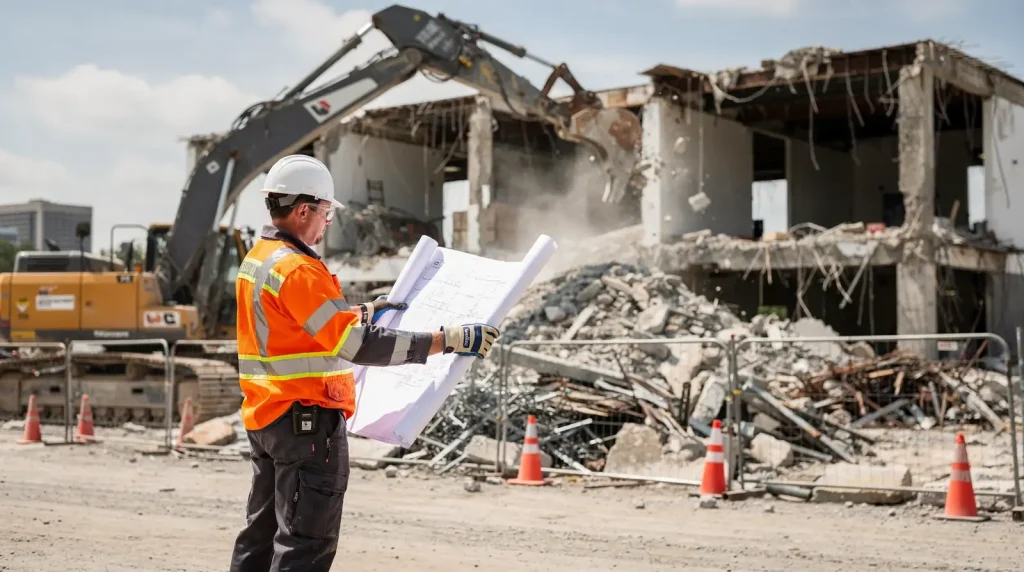
Five sequential steps carry a project from initial planning to final cleanup: site assessment, method selection, equipment deployment, controlled execution, and closeout. Each step depends on the one before it, so skipping ahead invites damage claims, schedule slips, or safety incidents. Property owners and contractors evaluating a demolition partner should expect this sequence to be documented, not assumed.
Planning determines which technique fits the structure and site conditions. Demolition planning OKC teams use this phase to classify the work: interior concrete cutting and removal, trench pourback, flatwork demolition, sidewalk removal, and driveway removal each call for different tooling and sequencing. Structural elements that carry load require a separate track entirely. Concrete Demolition OKC: Essential Tips for Homeowners, planned and reviewed before a single cut is made.
Selective demolition and interior strip-outs often precede heavier work, clearing space and reducing risk. Wire sawing, core drilling, and robotic or hydro demolition get selected based on structural load, access constraints, and proximity to occupied areas.
This engineered demolition process OKC contractors rely on treats each phase as a checkpoint. The demolition workflow OKC teams follow does not compress steps to save time. It sequences them to prevent costly rework and protect adjacent structures.

Delays and closeout headaches shrink through disciplined follow-through, not luck. A well-run engineered demolition process okc teams execute ends with thorough cleanup. Haul-off, keeping the project on scope and on schedule rather than trailing into extra billable weeks. The Ultimate Guide to Concrete Demolition in Oklahoma City: Costs, Permits, and after demolition wraps, so cleanup timing becomes a scheduling factor project managers must plan around, not an afterthought.
General contractors and facility stakeholders should expect proof of insurance and contractor-ready paperwork before mobilization, not after. Fully insured operations paired with organized documentation support B2B requirements and produce predictable outcomes clients can plan against.
General contractors, construction managers, and facility stakeholders on commercial, industrial, and government projects benefit most. These are environments where accountability, precision, and schedule integrity carry real financial weight. Sound demolition planning okc teams build upfront, paired with a repeatable demolition workflow okc projects can audit, prevents the surprises that turn a tight schedule into a missed deadline.
Crews complete site assessment, ground-penetrating radar scanning, utility verification, structural review, and job-site risk assessment. These five checkpoints prevent struck utility lines, structural collapse, and stop-work orders on commercial projects.
A licensed structural engineer drafts the formal plan, mapping the safest sequence for removing structural components. This document guides multi-story or load-bearing demolition to keep the process OSHA-compliant and predictable.
Controlled execution relies on tools like wire saws and robotic units to perform the actual demolition. This phase follows site assessment, structural review, and permit verification in the engineered demolition workflow.